




Research Spotlight Series #4 - From pixels to isolation: How technology impacts social withdrawal


How is technological addiction linked to depression and social withdrawal among young adults?In this study, researchers explored the relationships between technological addiction, depression and Hikikomori tendencies, a pattern of prolonged social withdrawal that can involve avoiding school, work and social interactions.Across two studies involving young adults, the findings revealed that technological addiction, depression and risk factors associated with Hikikomori were linked to stronger Hikikomori tendencies. The results also suggested that depression and Hikikomori risk factors may help explain the relationship between technological addiction and social withdrawal.These findings highlight the importance of understanding the psychological and behavioural factors associated with social withdrawal, and may help inform future approaches to supporting young adults at risk.Watch to learn more about the research findings and their implications for understanding Hikikomori tendencies among young adults.#JCUSingapore #Research #Psychology #MentalHealth #Hikikomori
More from Youtube
- 2:58Offer and Contract Acceptance 2026Congratulations on getting an offer from JCU Singapore! Here's how to accept your offer.
- 0:59Describe your JCU experience using only 4 letters! #jcusingaporePOV: You have to describe your JCU experience using only 4 letters 👀
- 1:40The #1 Misconception About Video Game AddictionThe #1 Misconception About Video Game Addiction. Find out more from Associate Professor in Psychology at JCU in Singapore https://www.jcu.edu.sg/jcu-conversations/podcasts/jcu-conversations-50-peter-chew
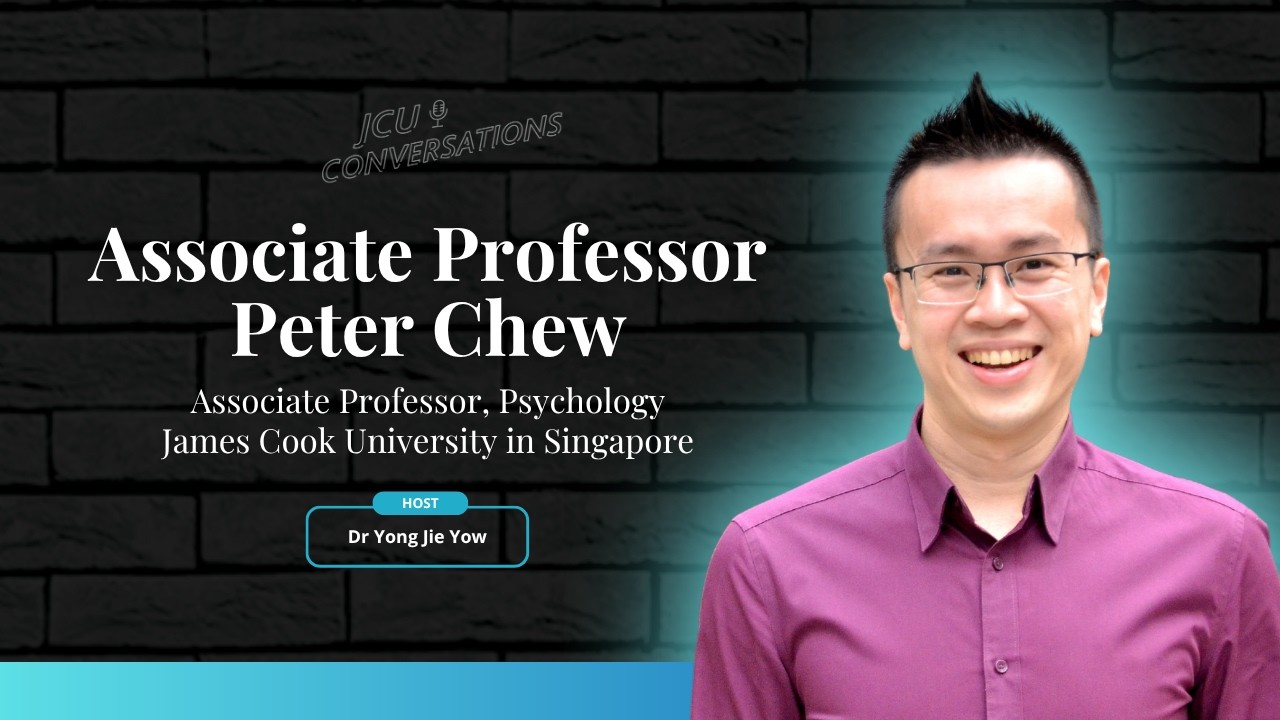
- 17:15Ep50: The #1 Misconception About Video Game Addiction | Associate Professor Peter Chew,JCU SingaporeGaming isn't the problem, but when does it become one?Video games can build thinking skills, provide stress relief, and foster social connections. Yet for some people, gaming begins to interfere with work, school, relationships, and everyday life.In this episode of JCU Conversations, our guest Associate Professor in Psychology Dr Peter Chew, whose research focuses on behavioural addictions, unpacks the difference between passionate gaming and problematic gaming. He discusses why Singapore appears to have higher rates of problematic gaming among young adults than the global average, the role stress plays, common misconceptions about gaming addiction, and what parents, educators and individuals can do to recognise the warning signs early.This episode’s host: Dr Yow Yong Jie, Lecturer in Psychology at James Cook University (Singapore Campus). 🎧 Listen Now: https://www.jcu.edu.sg/jcu-conversations/podcasts/jcu-conversations-50-peter-chew 🔗 Explore More Episodes: https://www.jcu.edu.sg/jcu-conversations Subscribe for more engaging conversations with industry leaders and experts! 🌟 Spotify - jcu.sg/spotify Apple Podcasts - jcu.sg/apple YouTube Playlist - jcu.sg/youtube#JCUConversations #Podcast #University
- 1:30What was your childhood dream? #JCUSingapore #JCUGrads✨ From childhood dreams to graduation day. Some dreams stayed the same, while others took unexpected turns. Every journey has led to this milestone.Congratulations to the Class of 2026! 💙
- 2:03:56JCU July 2026 Graduation Ceremony | SingaporeCatch the James Cook University (Singapore Campus) graduation ceremony live stream and watch our students graduate in real time.We are incredibly proud of you and thrilled to be part of your special day! Congratulations to all the graduates! 🎉🎉🎉#JCUSingapore #graduation #JCUgradConnect with James Cook University, Singapore: Like us on Facebook: https://www.facebook.com/jcu.singapore.fanpage/ Follow us on Twitter: https://twitter.com/jcu_singapore Follow us on Instagram: https://www.instagram.com/jcusingapore Follow us on TikTok: https://www.tiktok.com/@jcusingapore And for more news and information, visit https://www.jcu.edu.sg/